

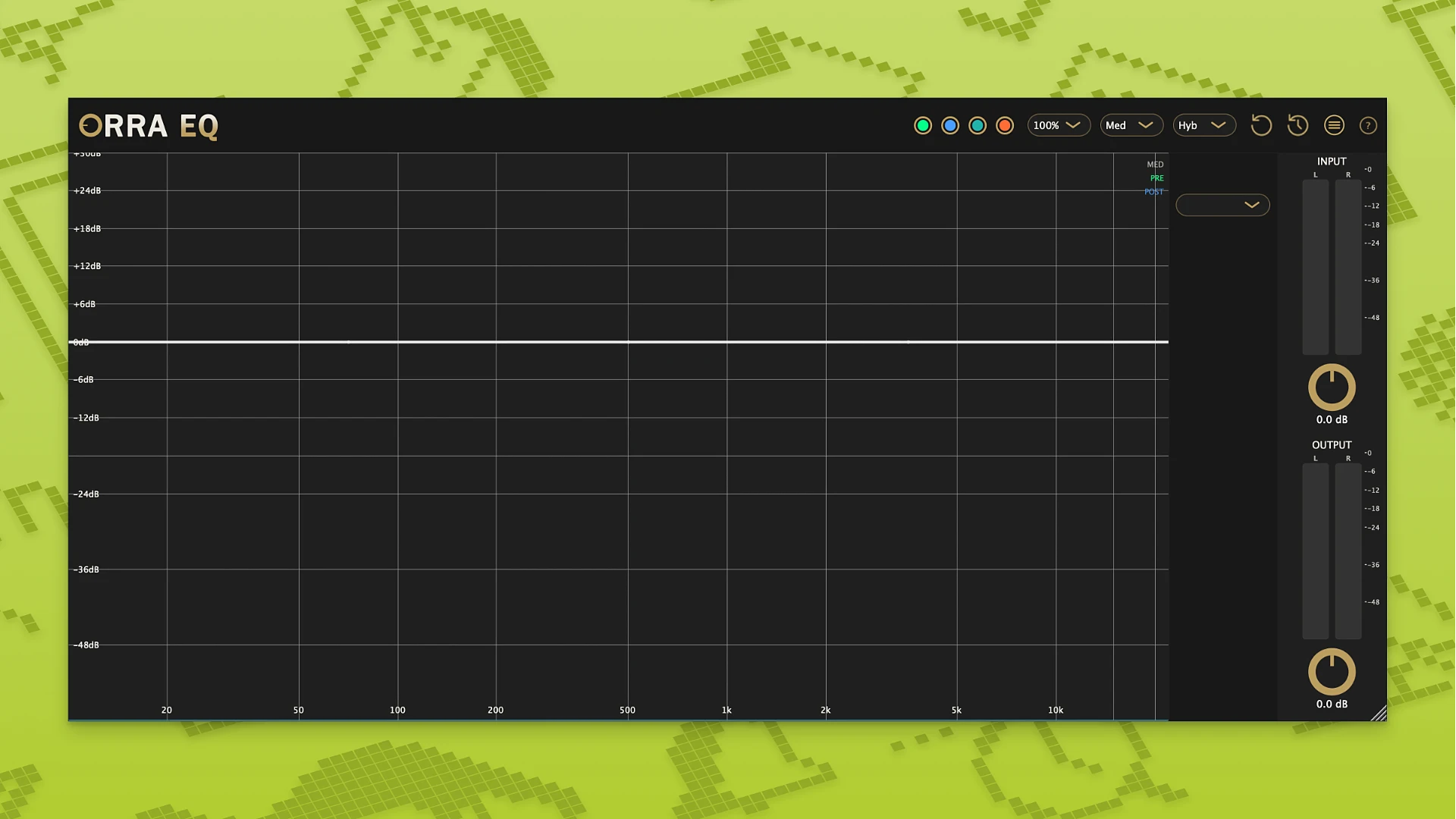
Orra Audio’s Orra EQ is a 16-band parametric equaliser that integrates dynamic processing, analogue-style saturation, and surgical EQ into a single cumulative processing chain. It enables separate per-frequency adjustments across your audio and is made for precise tone shaping.
Orra EQ is a sophisticated multi-band equaliser that integrates dynamics processing, saturation, and frequency manipulation into one device. It enables you to work with each component of the spectrum independently and apply various processing techniques, in contrast to traditional solutions.
This increases your flexibility since you may concurrently change the dynamics of some frequencies, add richness to others, and modify others.
For instance, you can use a single plugin to tighten the low end, add solidity to the mids, and brighten the highs. You can use it for both creative sound alterations and exact adjustments thanks to its flexible settings. When total control over the sound’s character is needed, Orra EQ is appropriate for mixing, mastering, and sound design.
Technical Details
- Q Range: 0.1 to 40.
- 48 dB/octave is the maximum filter slope
- 10 Hz to 22 kHz is the frequency range.
- Visuals: Offers pre/post-processing viewing choices and real-time input/output analyzers
- Series Architecture: Instead of using typical parallel processing, bands feed into each other cumulatively to create analogue-style harmonic accumulation.
- Multimode Bands: EQ, Dynamic EQ, Orra Tube, Tape, and Models are the five operational options available for each of the 16 bands.
- Dynamic Saturation: This technique acts as an upward compressor, applying saturation mainly to quieter signals while maintaining the clarity of your louder peaks. 17 different saturation options, including tube, console, and tape algorithms, are available in the Massive Saturation Palette.
- Mid/Side Processing: You have the option to process the stereo, mid, or side channels separately for each band.
- Musicality: Has a special “Snap to Key” function that automatically adjusts frequency increases to fit the major key


Leave a Comment